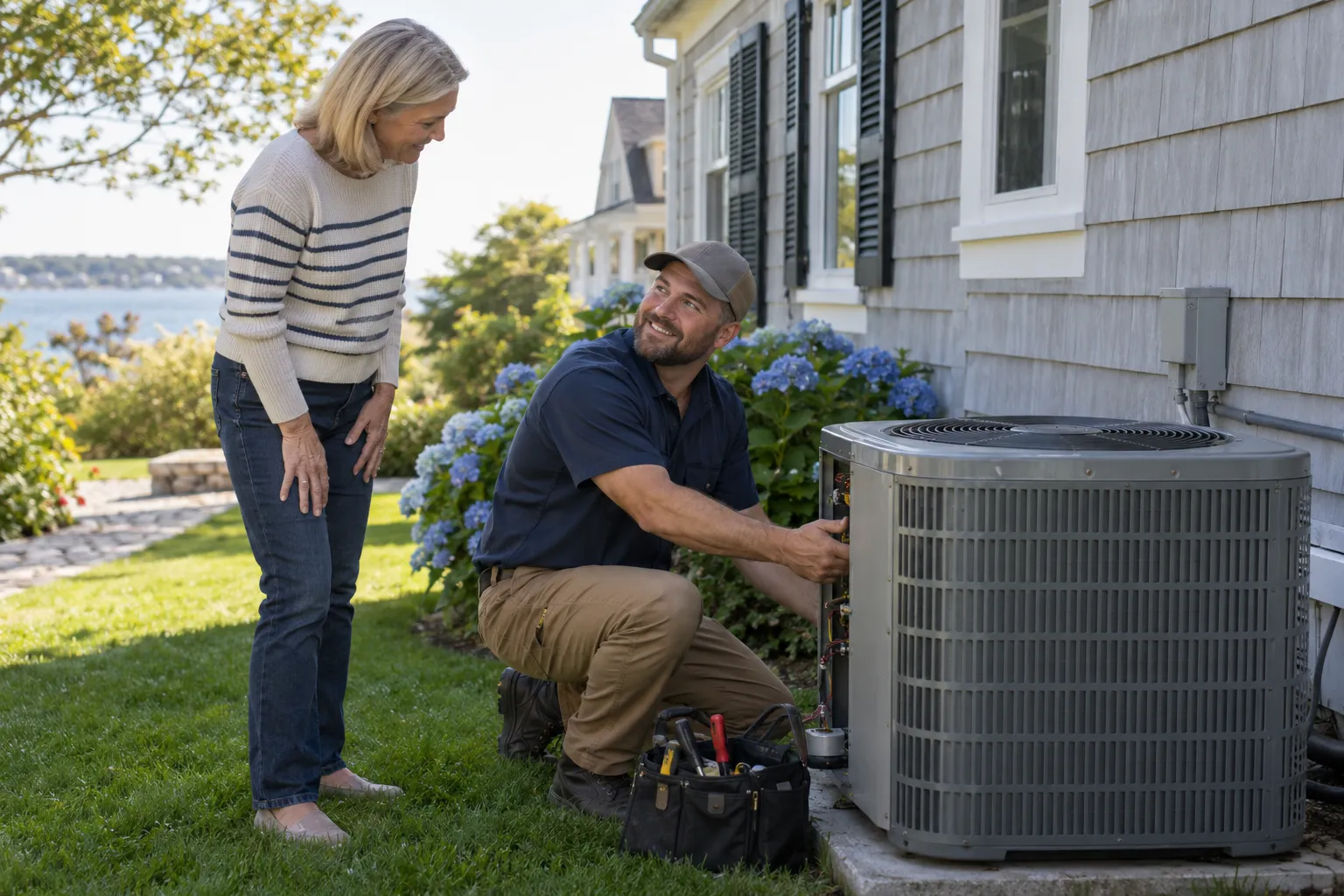
Is it okay to wait if my AC is only a little weak?
A lot of people think a weak AC can wait until it quits. In practice, a weak system is often already working too hard. Low airflow, ice on a line or longer run times are small signs. They can point to a clogged filter, a refrigerant leak or a tired part. Acting early often keeps a smaller repair from turning into a bigger one. A local provider can check it.
Why does my furnace make a strange noise?
Many people think furnace noise is normal and will fade. Sometimes it is just a dirty filter. Other times, a squeal, rattle or bang points to a worn belt, loose part or ignition trouble. Noises are often the first warning. Turn the system off if the sound is loud or harsh, then ask a provider in our network to take a look. Do not open panels yourself.
What should I do if I smell gas or burning near my furnace?
Safety comes first, and this is not a myth to test. If you smell gas, leave the home, avoid switches and flames, and contact your gas utility or emergency services from outside. For a burning smell without gas, shut the system off and open a window. Do not restart it. Then Request a callback to check provider availability for an inspection. A carbon monoxide alarm on each floor adds another layer of protection.
Will my homeowners insurance pay for a broken furnace or AC?
Many people assume insurance covers any breakdown. In practice, wear and tear is usually not covered. Some policies may cover sudden damage, such as a storm or a burst pipe. Check your policy and ask your insurer. Providers can often help document damage for a claim, with notes and photos. Keep all paperwork and get a written quote before work begins.
How can I prevent a breakdown before winter or summer?
Many people believe a system that runs is a system that is fine. Look before it breaks. Change filters on schedule, keep vents clear, and keep the outdoor unit clear of leaves and snow. Listen for new sounds and watch for uneven rooms. A yearly tune-up by a local provider helps catch worn parts early.
How fast does a small HVAC problem get worse?
Timing changes the outcome. In the first days, you may only notice a weak airflow or a odd smell. Within weeks, strain can wear out parts like motors and compressors. In cold weather, a heating failure can also raise the risk of frozen pipes. Many providers can respond quickly, so reach out at the first sign.
Is emergency AC repair worth it, or should I wait for a regular visit?
Some people think every problem needs a rush visit. Others think everything can wait. The truth sits between. If the home is unsafe, very hot, or someone is vulnerable to heat, ask about emergency AC repair right away. If the issue is minor, a standard visit may do. Request a callback to check provider availability and describe what you see.
When should I look at furnace replacement near me instead of repair?
A common belief is that repair is always cheaper than replacing. Not always. If the unit is old, needs repeated fixes, or runs poorly, replacement may make more sense. Typical U.S. replacement costs vary widely by size, type and home layout. Ask providers for a written quote that compares both options so you can decide with clear numbers.