How do I know if my AC needs to be replaced?
Age over 12 years, frequent repairs, uneven cooling, loud noises and rising bills are common signs. A provider can inspect it and tell you more.
Request an estimate today
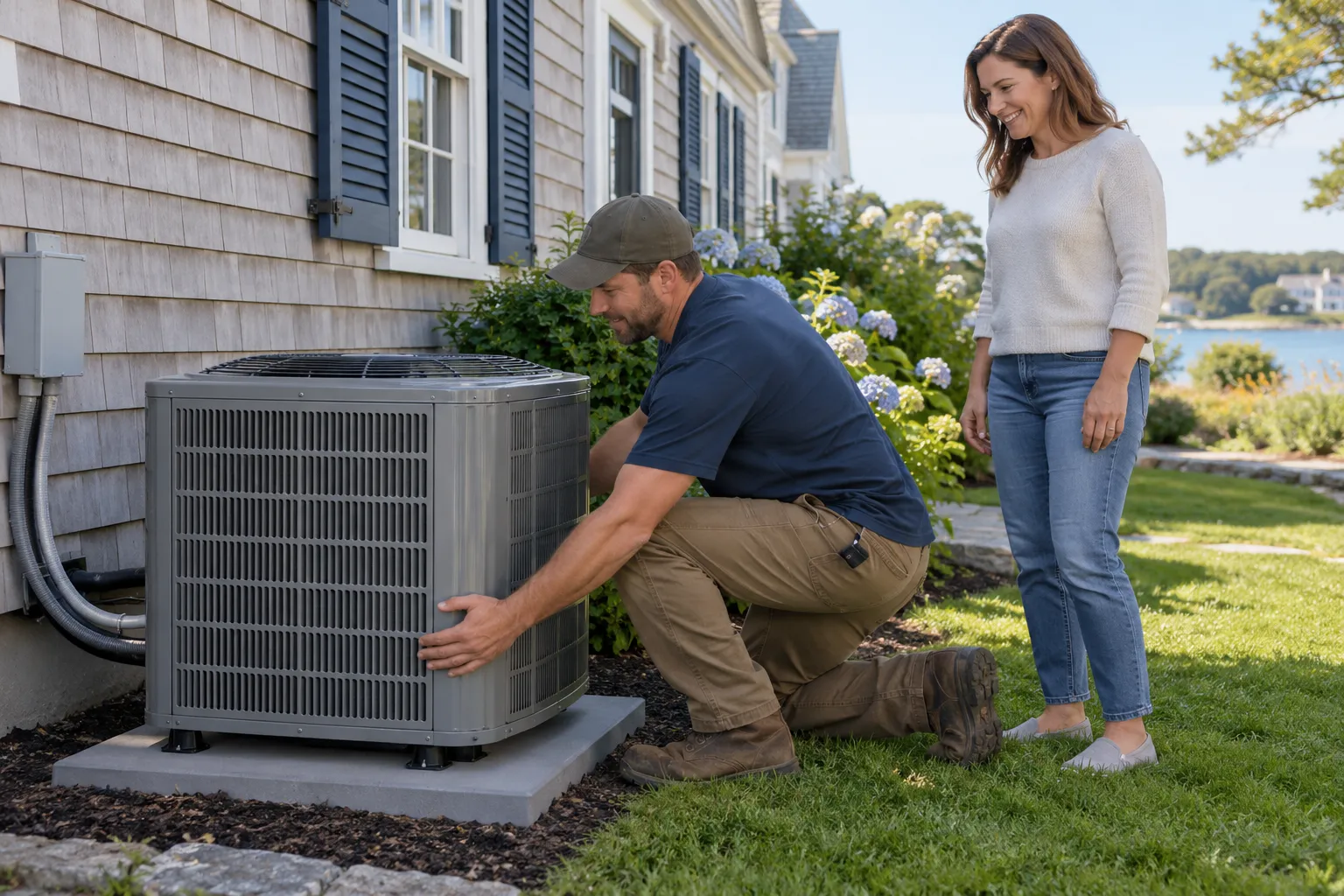
Many people believe an air conditioner is fine until it stops. In practice, a tired system gives hints for seasons. It runs longer, cools unevenly and adds to your bill. Acting on those hints gives you time to compare options instead of rushing.
Eighthunt Heating & Air is a referral service. We do not install anything ourselves. We connect homeowners with independent local providers in the Stamford area who handle the site check, sizing, equipment and installation. You can ask about central systems, ductless units or heat pumps, and you can request an estimate with no obligation. Older homes, tight attics and full basements all affect the plan, so a provider who knows local housing can make a real difference.
A lot of people think an AC only needs replacing once it quits. In practice, the first signs show up long before that. Rooms cool unevenly. The system runs longer to do less. Bills creep up. Small signs, early action gives you a calm choice instead of a forced one.
Look before it breaks. These clues are worth writing down:
Two or three of these together is a good reason to ask a provider for an opinion.
Here is how it often plays out. In the first weeks, the AC runs a little longer and you shrug it off. Over a month or two, a stressed compressor or weak capacitor adds strain. Then the first heat wave hits, and every system in town is working hard. Providers get busy. A unit that limps along in June may quit in July.
Waiting rarely saves money. It usually moves the decision to the worst possible moment.
There is a belief that a repair is the cheaper road. Sometimes it is. A simple part on a younger system makes sense. But when the repair bill is a big share of a new system's price, or the unit is old, many providers suggest replacing it. If the AC fails suddenly, Emergency AC repair may keep you cool while you plan. Ask the provider to lay out both paths in writing.
Not every home needs the same setup. Here are the common ones:
Housing here is often older. Cape Cod style homes have snug upstairs rooms under sloped ceilings. Full basements and stone or block foundations limit where equipment and lines can go. Multi-family buildings may need separate zones so each unit controls its own comfort. Some homes have small ducts, or none at all. A provider who has seen these layouts can suggest a fit, such as ductless heads upstairs and a central system below.
Many homeowners think bigger is better. In practice, an oversized unit cools fast, shuts off, then starts again. This short cycling leaves air damp, wastes power and wears parts. A unit that is too small runs all day and never catches up.
Providers use a load calculation. It looks at square footage, windows, insulation and sun exposure. Matching the old unit's size is only a guess.
Scope varies, so ask for a written list. A typical job covers:
A new outdoor unit performs well when the indoor coil and air handler are matched to it. Mixing old and new parts can cut results. If your furnace is also aging, it may make sense to plan both together. Homeowners who search furnace replacement near me often find that one provider can quote the whole heating and cooling setup, with one thermostat and one set of ducts to plan around.
AC efficiency is shown as a SEER2 number. A higher number means less electricity for the same cooling. Some people assume the highest number always pays off. It depends on how many hot weeks you have. With cold, snowy winters and a shorter cooling season, a mid-range model can make more sense than a top-tier one. Ask for estimated running costs, and check for local utility rebates.
Freeze-thaw cycles and coastal storms can shift a pad or knock debris into the outdoor unit. Heavy snow and falling roof ice are tough on fins and lines. Ask the provider about pad height, clearance and a cover for the off season. A yearly HVAC service visit also helps catch small issues early.
Eighthunt Heating & Air is a referral service, and the independent providers do the work. Request a callback to check provider availability, or send a request for an estimate. There is no obligation either way.
A provider looks at your rooms, ducts, windows and insulation before suggesting any equipment size.
Sizing is based on real numbers for your home, not just the old unit.
The worn system is taken out and its refrigerant is handled by trained providers.
The new system is tested, and the provider shows you the controls.
Prices vary by home size, system type and how easy the job is. These are typical U.S. ranges only. Ask every provider for a written quote before work begins.
| Item | Typical range | Notes |
|---|---|---|
| Central AC replacement | $5,000 – $12,000 | Depends on size, efficiency and duct condition |
| Single-zone ductless | $3,000 – $7,000 | Good fit for additions and ductless rooms |
| Multi-zone mini-split | $6,000 – $15,000 | Price rises with each indoor head |
| Heat pump system | $6,000 – $14,000 | Provides cooling and heating |
| Duct changes or sealing | $500 – $3,500 | More work needed in older homes |
| Pad, electrical and thermostat | $300 – $2,500 | Varies with panel and wiring needs |
Note the noises, warm rooms, rising bills or repeat repairs you have noticed with your current AC.
Request a callback to check provider availability or send the request form.
A local provider reviews your home and gives you size, brand and price details.
You choose a provider, agree on a date and the work is done.
Planning ahead lets you compare options calmly instead of choosing under pressure.
Local providers do the work, so you can compare their quotes.
Providers familiar with local housing can plan around basements and tight spaces.
Requesting an estimate costs you nothing to decide on, and you choose what comes next.
Tell us what your system is doing. Request an estimate or ask about provider availability, with no obligation to hire anyone.
No obligationAge over 12 years, frequent repairs, uneven cooling, loud noises and rising bills are common signs. A provider can inspect it and tell you more.
Many central system swaps take a day or two, while ductless or multi-zone jobs can take longer. Older homes or duct changes may add time, so ask the provider for a schedule.
It depends on age and repair cost. If the unit is old or the repair is a big share of a new system, replacing it may make more sense. Ask for both quotes.
Tell us what your system is doing. Request an estimate or ask about provider availability, with no obligation to hire anyone.
No obligation