Why is my furnace running but not heating the house?
Common causes include a dirty filter, a blocked vent, a worn blower, or a thermostat problem. Try the safe quick checks first. If the house stays cold, ask a provider to inspect it.
Request a furnace estimate today
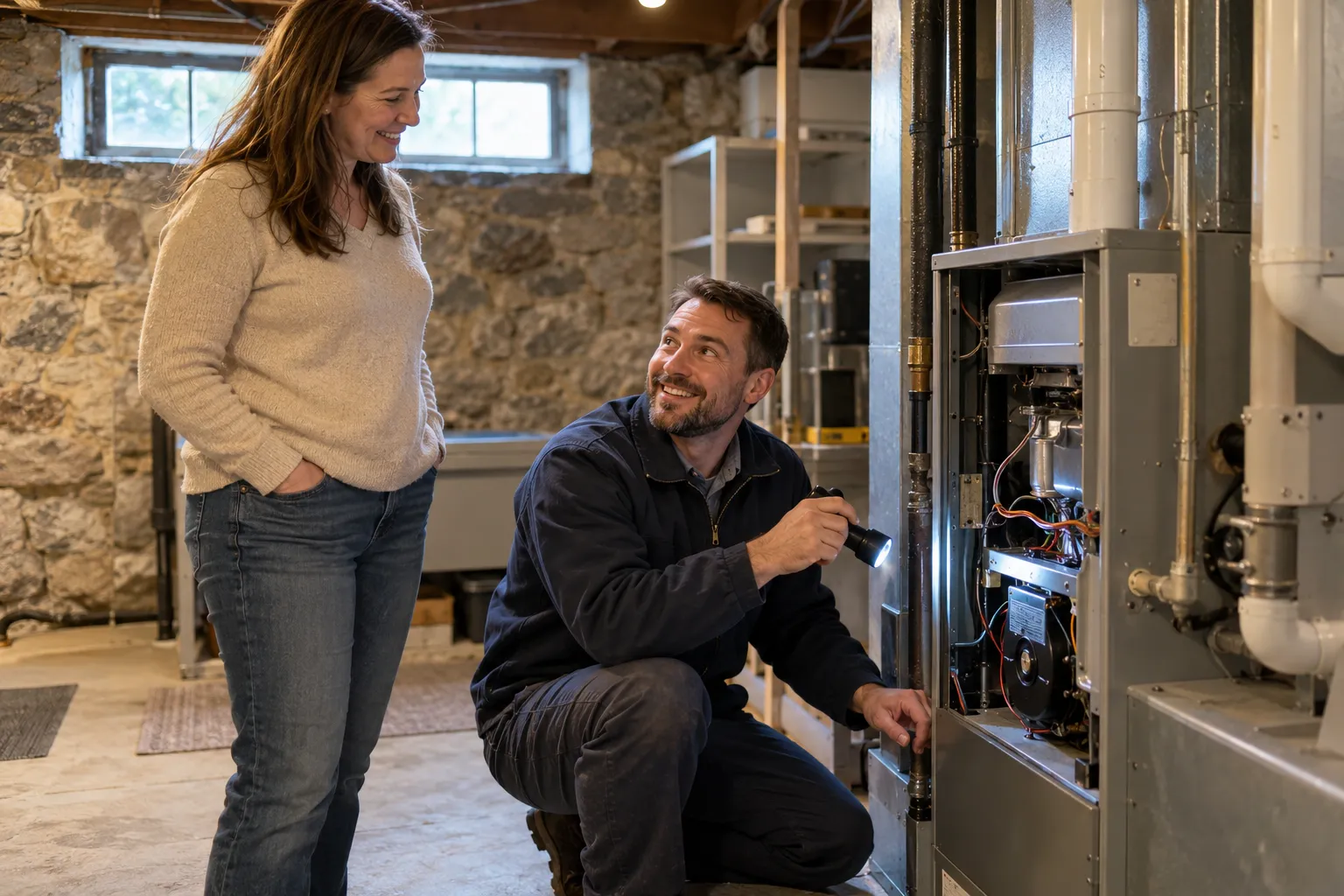
A lot of people think a furnace is fine until the house goes cold. In practice, most furnaces give hints first. They get louder, cycle on and off, or leave a room that never quite warms up. Those hints are the easiest time to act, before a small problem turns into a bigger bill.
Eighthunt Heating & Air is a referral service. We connect homeowners in the Stamford area with independent heating and cooling providers in our network. The providers do the inspection and the repair. You describe the problem, request an estimate, and decide what to do next with no obligation. This page walks through what to check, what to expect, and when a repair stops making sense.
A lot of people think a faint gas smell is normal for a furnace. It is not. If you notice a rotten-egg odor, treat it as an emergency.
Get everyone and the pets outside. Do not flip light switches, use a lighter, or start the furnace. From outside, call your gas utility or 911. Do not go back in until you are told it is safe. Furnace repair can wait. Your safety cannot.
Carbon monoxide has no smell. A cracked part or a blocked vent can let it into the living space. If a detector sounds, or people feel headachy and dizzy, move outside and call 911. Once the home is cleared, a provider can look at the cause.
Sometimes it does. Often it is something small. That is why a few safe checks are worth the five minutes.
Do not open the burner area or touch wiring. If the checks do not help, it is time for a provider.
Older homes do creak. Furnaces should not bang, squeal, or grind. A loud bang at startup, a high squeal, or a scraping sound often points to a part that is wearing out. Parts that wear out quietly tend to fail loudly.
Any one of these is a good reason to book a look. Look before it breaks.
It can cost a lot. Timing changes the outcome, so here is how it often plays out.
The house loses heat slowly at first. Many homes feel fine for a while, so people wait. Meanwhile, a part that is struggling may be straining others.
In cold snowy weather, indoor temperatures drop fast. Older homes with stone or block foundations and full basements lose heat quickly. Space heaters get pulled out, and they bring their own fire and power risks.
A small problem ignored through a cold snap can turn into a larger part failure. Basement pipes are most at risk when the home stays cold for days. Acting early keeps the repair small.
A provider usually starts by asking about symptoms and when they began. Then they check the thermostat, filter, ignition, burners, blower, venting, and safety controls. They explain what they found and give a written quote before starting. Ask them to show you the worn part if you are curious.
A common myth says an old furnace should always be replaced. Not so. A furnace with one worn part and good overall health can run well for years. Replacement starts to make sense when repairs pile up, the heat exchanger is cracked, or the unit is well past its expected life. If you are searching furnace replacement near me, ask a provider to compare both paths in writing. Good heating and cooling advice weighs repair cost against the age of the whole system.
Looking for cooling help instead, such as emergency AC repair? That has its own page.
Good providers answer these plainly. HVAC service is easier when both sides know the plan.
The first small sign is the easiest time to get help. Tell Eighthunt Heating & Air what is going on, and a provider in our network can take it from there.
A provider looks at burners, venting, and safety controls so the furnace runs safely, not just warmly.
Worn igniters, sensors, motors, and boards are diagnosed and replaced when needed.
Filters, vents, and the blower are checked for uneven heat and strain.
Before work begins, the provider explains the problem and puts the price and parts in writing.
These are typical U.S. ranges. Your price depends on the furnace, the part, and the job. Always ask for a written quote before work starts, and compare it with what you were told.
| Item | Typical range | Notes |
|---|---|---|
| Diagnostic visit | $75 – $200 | Sometimes applied to the repair |
| Igniter or pilot part | $150 – $450 | Common cause of no heat |
| Flame sensor | $100 – $350 | Often cleaned, sometimes replaced |
| Blower motor | $400 – $1,500 | Varies by motor type |
| Inducer motor | $400 – $1,000 | Moves exhaust out safely |
| Control board | $300 – $900 | Depends on make and model |
Tell Eighthunt Heating & Air what the furnace is doing, from strange noises to no heat at all.
A provider in our network that serves your area is lined up to contact you.
Compare the written estimate and ask your questions before agreeing.
The independent provider completes the repair, and you stay in charge of the decision.
Acting on a noise or a cold room can keep a minor fix from becoming a larger one.
Independent providers know older homes, basements, and cold winters in your area.
You can request an estimate and decide later whether to book.
Share the problem once and be matched without searching around.
Tell us what your system is doing. Request an estimate or ask about provider availability, with no obligation to hire anyone.
No obligationCommon causes include a dirty filter, a blocked vent, a worn blower, or a thermostat problem. Try the safe quick checks first. If the house stays cold, ask a provider to inspect it.
Not always. Banging, squealing, or grinding often means a part is failing. Turn it off if you smell gas or burning, and have a provider take a look.
Age, repair history, and safety all matter. One worn part on a healthy furnace is usually worth fixing. A cracked heat exchanger or repeated failures often point to replacement.
Tell us what your system is doing. Request an estimate or ask about provider availability, with no obligation to hire anyone.
No obligation